No: 28/75/DKom
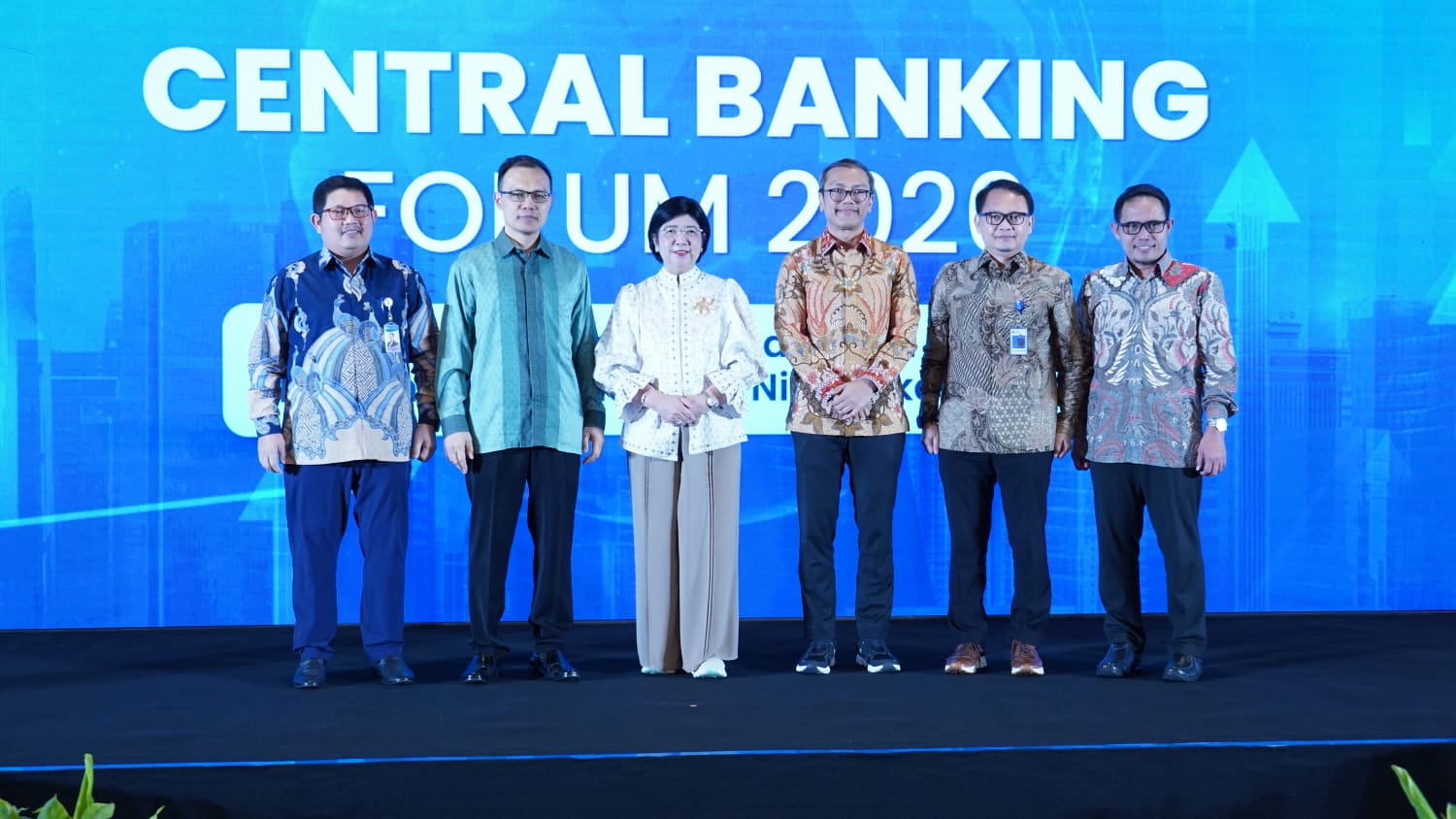
Bank Indonesia continues optimising its policy mix to maintain rupiah exchange rate stability amid heightened global uncertainty. The escalating conflict in the Middle East has intensified pressure on financial markets, commodity prices and international trade. This unusual situation requires a strong policy response that is consistent, pre‑emptive and measured to preserve domestic economic resilience. That was conveyed by the Senior Deputy Governor of Bank Indonesia, Destry Damayanti, in her keynote speech at a seminar, entitled “Indonesia's Economic Resilience Facing Global Exchange Rate Volatility," held in Jakarta on 13th April 2026.
Destry emphasised that global dynamics are intensifying pressure in financial markets and on the exchange rate. In response, Bank Indonesia is optimising its all available monetary instruments in a measured, continuous and timely manner by strengthening offshore intervention through non‑deliverable forwards (NDF) and onshore intervention through the domestic spot market, domestic non‑deliverable forwards (DNDF) and secondary-market purchases of government securities (SBN). This policy mix is supported by Indonesia's ample foreign exchange reserves. At end‑March 2026, reserves stood at USD148.3 billion, equivalent to 5.8 months of imports and servicing government external debt, which provides sufficient room for Bank Indonesia to maintain rupiah stability and strengthen external sector resilience.
Echoing those sentiments, BCA Chief Economist, David Sumual, noted that exchange rate stability should be assessed not only based on the level of the exchange rate but also by the stability of its volatility. “For the market, the main concern is not just the level of the exchange rate but the stability of its volatility. Such stability is an important factor for maintaining investor and business confidence," David said. To bolster stability, Bank Indonesia has enhanced governance in domestic foreign exchange transactions by requiring transactions exceeding USD50,000 to be supported by comprehensive underlying documents. This step ensures that such transactions support seamless economic activity.
In line with Bank Indonesia's stabilisation measures, Noor Faisal Achmad, Director of Economic Stabilisation Strategy at the Directorate‑General of Economic and Fiscal Strategy (DJSEF) of the Ministry of Finance, emphasised that the Government continues to protect market confidence through prudent and measured management of the State Revenue and Expenditure Budget (APBN). Meanwhile, CORE Indonesia Executive Director, Mohammad Faisal, underscored the importance of exchange rate stability in mitigating inflation risks from potential spikes in energy and food prices, and he appreciated Bank Indonesia's calibrated stabilisation measures taken in synergy with the Government.
Bank Indonesia also ensures adequate rupiah liquidity to support economic activity. Growth in base money (M0) remains high, indicating that policies to expand liquidity continue, supported by strengthened wdexpansionary monetary operations.
To maintain financial market stability, Bank Indonesia has intensified coordination with the Government, including purchasing SBN when needed, coupled with the timely selling of SBN in line with market conditions. Bank Indonesia is also maintaining attractive domestic instruments for investment to sustain steady capital inflows.
Reducing the reliance on the US dollar in bilateral transactions, Bank Indonesia continues to expand Local Currency Transactions (LCT) with partner countries. Senior Deputy Governor Destry noted that at year-end 2025, LCT transactions totalled USD25.72 billion, representing a two-fold increase relative to 2024.
Erwin Gunawan Hutapea, Head of the Monetary Management and Securities Asset Department at Bank Indonesia, emphasised that Bank Indonesia safeguards the effective functioning of market mechanisms and the availability of liquidity to support economic activity. Bank Indonesia continues to strengthen monetary operations (MO) strategies, including auctions of Bank Indonesia Rupiah Securities (SRBI), with yields calibrated gradually to remain competitive and attractive for investors.
Bank Indonesia remains firmly committed to maintaining rupiah exchange rate stability, enhancing the attractiveness of domestic assets and ensuring adequate liquidity to support sustainable economic growth. Continued coordination with the Government and policy communication with stakeholders will be pursued to manage expectations and strengthen national economic resilience.
Jakarta, 13th April 2026
Communication Department
Ramdan Denny Prakoso
Executive Director