What Is The Payment System?
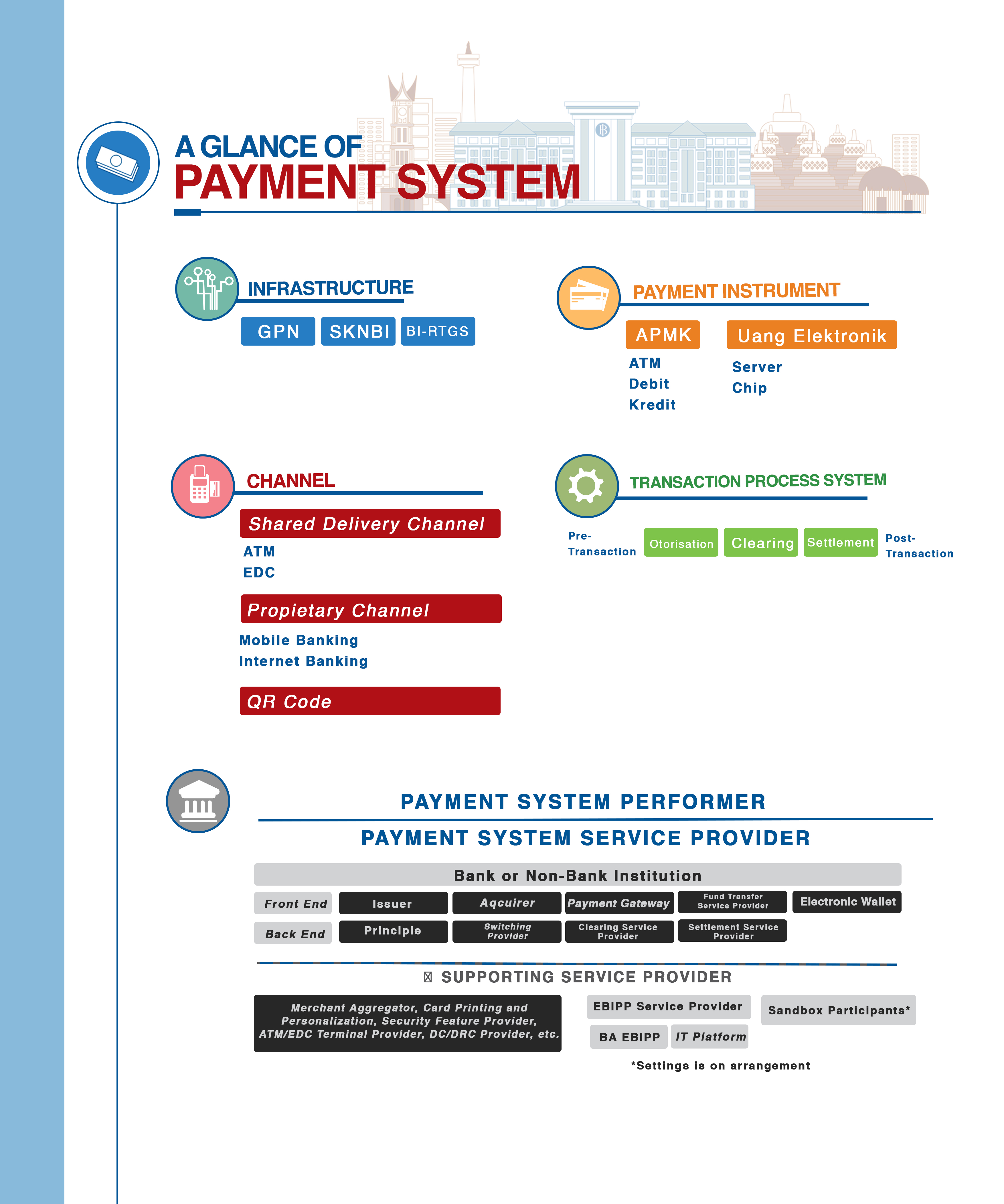
The payment system is a system encompassing regulations, institutions and the
mechanisms used to transfer funds in order to settle the obligations that arise
from economic activity. The payment system was conceived at the same time as the
concept of money as a medium of exchange or intermediary in the transactions of
goods, services and finance. In principle, the payment system has three
processing stages, namely authorisation, clearing and settlement.
Evolution of The Payment System
The payment system continues to evolve in line with the evolution of money,
driven by three salient factors, namely technological innovation and
business models, public traditions and the policies of the respective
authorities. Initially, payment instruments were dominated by the barter
system of trade. Issues only arose when two people willing to trade could
not agree a value of exchange or if the double coincidence of wants was not
met.
Seeking to overcome those limitations, humas developed commodity money.
Commodity money consists of basic necessities with an intrinsic value
required by all, such as salt, tea, tobacco as well as various grains. In
addition, livestock were used as commodity money between 900-6000 BC.
Wheat, vegetables and plants were subsequently used as commodity money after
the emergence of agriculture.
Primitive money began to appear around 1200 BC in the form of shells. The
Chinese began producing imitation cowrie shells from metal and copper.
Ancient paper money can be traced back to white deerskin money in around 100
BC, which was given various colours.
Paper money has become the dominant payment instrument. In Europe, Sweden
was the first country to use paper money in 1661, after Spain established a
paper factory in 1150
.
![EVOLUSI-SISTEM-PEMBAYARAN-[1]-EN.jpg](/en/fungsi-utama/sistem-pembayaran/PublishingImages/default/EVOLUSI-SISTEM-PEMBAYARAN-[1]-EN.jpg)
Source: Various sources, processed
Cash Payment System
In general, the payment system is divided into the cash and noncash payment
systems based on the instruments used. The cash payment system uses
currency (banknotes and coins) as a payment tool.
Noncash Payment System
The noncash payment system uses card-based payment instruments, cheques,
funds transfers, debit notes as well as card-based and server-based
electronic money. The cashless payment system includes wholesale and retail
transactions.
Wholesale transactions are characterised by their importance and urgency,
including interbank transactions, financial market transactions as well as
transactions with a ticket size exceeding Rp1 billion. The infrastructure
used to process such transaction activity includes the Bank Indonesia – Real
Time Gross Settlement (BI-RTGS) system and Bank Indonesia – Scripless
Securities Settlement System (BI-SSSS). On the other hand, retail
transactions are lower value, higher frequency transactions between
individuals with a ticket size of less than Rp1 billion. The infrastructure
used to process retail transactions is the National Clearing System (SKNBI)
.
Dynamic Evolution
Payment instruments in Indonesia have developed rapidly from cash-based to
cashless instruments, including paper-based instruments such as cheques and
funds transfers through clearing/settlement, as well as paperless
instruments such as electronic funds transfers and card-based payment
instruments (ATM/debit cards, credit cards, pre-paid cards).
Over the past decade, a wave of digitalisation has penetrated people’s
everyday lives, prompting a dramatic behavioural change. Payment
instruments have become more diverse with the emergence of chip-based and
server-based electronic money. In addition, the pattern of public
consumption has begun to shift, thus demanding fast, secure and mobile
payments through various platforms, including the web, mobile, unstructured
supplementary service data (USSD) and SIM Toolkit (STK).
Most recently, virtual currency instruments have appeared as digital
currency issued by third parties, not the monetary authority, obtained
through mining, purchasing and rewards. Holding a virtual currency is high
risk and speculative due to the lack of an official administrator or
underlying assets and a highly fluctuating trade value, exposing the
currency to the risk of bubbles and abuse in terms of money laundering and
terrorism financing, which influences financial system stability and can
incur public losses.
Therefore, Bank Indonesia would like to remind everyone that selling, buying or
trading virtual currencies are forbidden in accordance with Bank Indonesia
Regulation (PBI) No.
PBI 18/40/PBI/2016 concerning Payment Transaction Processing and Bank
Indonesia Regulation
PBI 19/12/PBI/2017 concerning Financial Technology.
Payment System Development
Recently, the dynamics of everyday life have engendered a new mindset that
is developing over time. When a payment mechanism is required to
accommodate all of the public's needs in terms of transferring funds
quickly, securely and efficiently, payment technology innovations emerge
more rapidly. Nevertheless, Bank Indonesia is required to constantly ensure
that payment system development exists within the prevailing regulatory
corridor in order to ensure uninterrupted and secure payment system
activities.
Reflecting such conditions, payment system development is inextricably
linked to infrastructure technology innovations, thus payment system
development in Indonesia is currently oriented towards strengthening the
infrastructure and system development supported by IT advancements. The
payments industry, including banks and nonbanks, is competing to develop the
payment system. In fact, the contribution of nonbanks in terms of payment
system operation is currently expanding as more nonbanks cooperate with the
banking industry as network providers and potential issuers of payment
instruments.
As a provider of settlement services through the Bank Indonesia – Real Time
Gross Settlement (BI-RTGS) system, National Clearing System (SKNBI) and Bank
Indonesia – Scripless Securities Settlement System (BI-SSSS), Bank Indonesia
constantly strives to improve and update the existing mechanisms in order to
safeguard efficiency and security in line with technological advancement and
the developing needs of the public.
The public now has a diverse choice of payment instruments at its
disposal. A shift has occurred from paper-based instruments, such as
cheques and funds transfers, towards card-based and electronic-based
instruments as the public becomes more familiar and accustomed to using
ATM/debit cards and credit cards as well as chip-based and server-based
electronic money as payment instruments.
As operator, Bank Indonesia has strengthened payment system infrastructure
through the operation of payment versus payment (PvP) settlement services in
the Bank Indonesia – Real Time Gross Settlement (BI-RTGS) system, meaning
that foreign currency transactions, specifically United States dollars
(USD), against the Indonesian rupiah (IDR), are settled simultaneously,
which avoids settlement risk when exchanging currencies. In addition, as
payment transactions become less restricted moving forward, economic players
will require more liquidity, with the emergence of various derivatives of
global financial products and the elimination of regional economic borders
through regional cooperation, such as the ASEAN Economic Community (MEA).
In addition to PvP, Bank Indonesia has also strengthened payment system
infrastructure by incorporating the settlement function for securities in
the Bank Indonesia – Scripless Securities Settlement System (BI-SSSS) into
the payment and settlement system of Bank Indonesia. This has increased
settlement efficiency and strengthened infrastructure and human resources,
culminating in higher quality services for Bank Indonesia's stakeholders.
On the retail side, Bank Indonesia has refined the National Clearing System
(SKNBI) in order to minimise credit risk in terms of debit clearing. The
application of no money no game principles in the debit clearing process
requires banks to maintain an adequate pre-fund to meet payment obligations
to other banks. Consequently, clearing participants apply more efficient
liquidity management.
Still on the retail side, payment industry development is oriented towards
the creation of interoperability amongst the systems used in order to ensure
payment system security and efficiency. National standardisation of
ATM/debit cards is one example of this. Motivated by security issues when
using ATM/debit cards, the shift to chip technology is expected to minimise
fraud cases involving ATM/debit cards. In addition, interoperability has
also been achieved amongst electronic money operators.
Bank Indonesia has already stipulated five visions for the payment system
in Indonesia by 2025. As a quick win towards the manifestation of those
visions, Bank Indonesia applies operational policy for the National Clearing
System (SKNBI) that meets public and industry requirements while maintaining
consumer protection principles.
Payment System Policy Development
The orientation of payment system policy and development began to shift around
10 years ago, from payment system infrastructure development operated directly
by Bank Indonesia towards a payment system industry regulatory and institutional
regime, particularly in terms of the retail payment system which has been
severely impacted by the flow of digitalisation.
-en.jpg)
Notes:
SPBI Milestones
Regulatory and Institutional Milestones
*Six bank participants
located in Batavia, namely Nederlandsche Handel Mij Factorij, De Hong Kong
and Shanghai Banking Corp., De Chartered Bank of India, Australia and China,
De Nederlandsche Indische Escompto Mij, De Nederlandsche Indische
Handelsbank and De Javasche bank
**Participants: Eight Clearing
Participants (BRI, BDN, BII, BCA, Bank Bali, Deutsche Bank, Standard
Chartered Bank and Citibank) and two internal participants from Bank
Indonesia (Thamrin Accounting and Kota Accounting).
Supporting economic activity, Bank Indonesia is avowedly committed to
providing rupiah currency throughout the territory of the Republic of
Indonesia as required by the public. The distribution of rupiah currency is
constantly strengthened to ensure balanced and equitable economic growth
throughout the archipelago. The structure of the currency distribution
network has been optimised through 12 cash depots, which act as hubs for all
Bank Indonesia representative offices.
Furthermore, Bank Indonesia also cooperates with the National Police and
Armed Forces to secure the currency distribution channels throughout the
territory of the Republic of Indonesia. Cash handling services are also
regularly enhanced in synergy with the banking industry, including the
prompt withdrawal of currency no longer fit for circulation. Cash handling
services have been prioritised in areas with limited access and proximity to
Bank Indonesia representative offices. In addition, premium cash services
are also provided during emergency or disaster conditions in order to
maintain economic activity.
Indonesia Payment System Blueprint for 2025:
Navigating the National Payment System in the Digital Era
Indonesia has absorbed an influx of digitalisation, creating massive future
potential. The digitalisation trend has impacted the structure of the
economy, changed the pattern of individual and corporate transactions as
well as disrupted conventional functions, with the financial sector no
exception.
The current trend of economic and
financial digitalisation in Indonesia has created a number of opportunities and
risks. Digital technology development and innovation have facilitated
convenient, rapid and efficient payment system development and have created vast
opportunities for economic and financial inclusion. Notwithstanding, such
advancements are not without risk, including cyber security risk, anti-money
laundering and counter-terrorism financing (AML/CTF) and protectionism in terms
of data exploitation. In addition, the tendency to monopolise the digital
ecosystem has left it vulnerable to market control and data misuse, which could
disrupt financial system stability. Another significant risk is the potential
loss of conventional banking and the emergence of shadow banking that can
seriously undermine monetary policy effectiveness.
The policy challenges facing the economic and financial authorities in the
digital era, Bank Indonesia in particular, include striking an appropriate
balance between efforts to optimise the opportunities afforded through digital
innovation with efforts to mitigate the inherent risks.
To that end, the Indonesia Payment System Vision and Indonesia Payment System
Blueprint for 2025 provide an unambiguous direction in terms of exploiting
digitalisation, while implementing Bank Indonesia's mandate in terms of currency
in circulation, monetary policy and financial system stability.
The five visions for the Indonesia Payment System include: First,
supporting national digital economy and finance integration in order to
safeguard the central bank functions of currency in circulation, monetary policy
and financial system stability, while supporting financial inclusion.
Second, supporting banking industry digitalisation as the dominant
force of the digital economy and finance through open banking and utilisation of
digital technology and data in the finance business. Third,
safeguarding interlinkages between FinTech and the banking industry in order to
mitigate shadow banking risk by strengthening digital technology (Application
Programming Interface – API), business cooperation and corporate ownership.
Fourth, safeguarding the balance between innovation and consumer
protection, integrity and stability, as well as healthy competition through Know
Your Customer (KYC) principles, Anti-Money Laundering and Combatting Terrorism
Financing (AML/CTF), openness and disclosure in terms of data/information/public
business, and the implementation of RegTech and SupTech for reporting,
regulation and supervision. Fifth, safeguarding the national
interest in terms of the cross-border digital economy and finance through
mandatory domestic transaction processing as well as cooperation between foreign
and domestic operators and service providers, while maintaining reciprocity
principles.
.jpg)
Manifestation of the five visions for the payment system will be realised
through five initiatives to be implemented directly by Bank Indonesia as well as
through collaboration and coordination with other relevant authorities and
industries. The first initiative is open banking and
interlinkages between the banking industry and FinTech, as realised through open
API standardisation, which facilitates secure financial information disclosure
between banks, FinTech and third parties.
The second initiative is retail payment development oriented
towards real-time 24/7 operation, with greater security and efficiency, achieved
through fast payments, National Payment Gateway (NPG) optimisation and unified
payment interface development.
The third initiative involves wholesale payment development
and financial market infrastructures (FMIs). The purview of the third
initiative encompasses several developments, including RTGS. The
fourth initiative talks about data, in this case the collaborative
and integrated development of national data for optimal benefit. The
final initiative involves regulations, oversight, licensing and
reporting to accelerate the digital economy and finance.
Through the Indonesia Payment System Blueprint for 2025, digital innovation
is expected to sustainably create access to formal financial and economic
services for 83.1 million unbanked and 62.9 million SMEs. Therefore, the
full panoply of efforts is currently directed towards a stronger and more
equitable future for Indonesia moving forward
.


